BURIED TOGETHER
Partner Mary Austin Sperry
Queer Places:
Wellesley College (Seven Sisters), 106 Central St, Wellesley, MA 02481
Cornell University (Ivy League), 410 Thurston Ave, Ithaca, NY 14850
2100 Pacific Ave, San Francisco, CA 94115, USA
Brooklawn Memorial Park, 2002 Congress St, Portland, ME 04102, United States
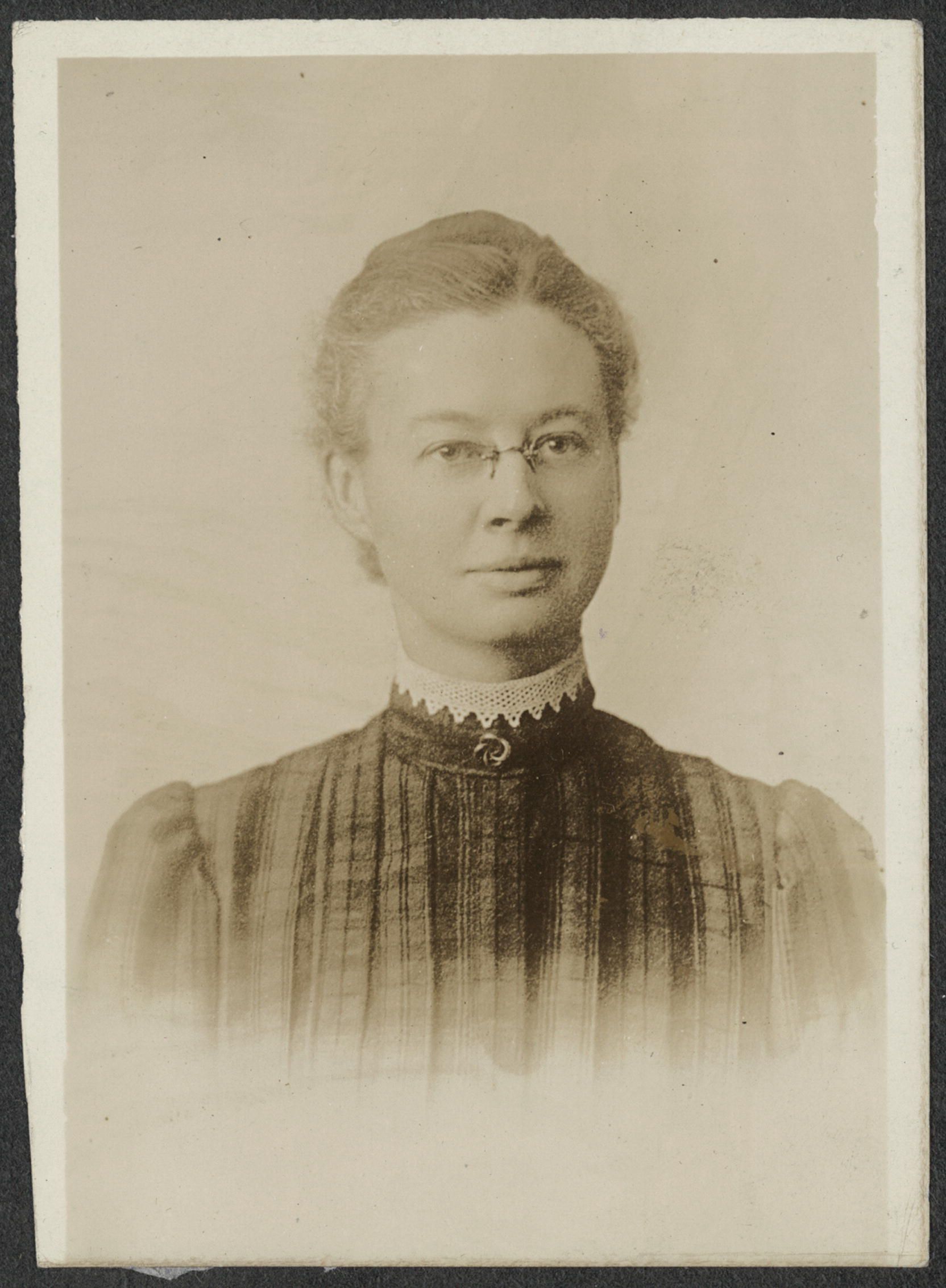 Abigail Hill "Gail" Laughlin (May 7, 1868 – March 13, 1952) was a pioneering American lawyer, suffragist, and politician born in Robbinston, Washington
County, Maine, to Robert Clark Laughlin and Elizabeth Porter "Bessie" Stuart Laughlin. As one of nine children, her early life involved financial
challenges after her father passed away in 1876, prompting the family to temporarily relocate to her mother's hometown of St. Stephen, New Brunswick,
before settling in Portland, Maine, in 1880. Demonstrating early academic excellence, Laughlin graduated with honors from Portland High School in 1886,
earning the Brown Medal for the highest grades among the girls in her graduating class. Though she received a partial scholarship to Colby College, she
could not afford to attend and instead entered the workforce as a bookkeeper in a china imports office, saving money to attend her dream school,
Wellesley College.
Abigail Hill "Gail" Laughlin (May 7, 1868 – March 13, 1952) was a pioneering American lawyer, suffragist, and politician born in Robbinston, Washington
County, Maine, to Robert Clark Laughlin and Elizabeth Porter "Bessie" Stuart Laughlin. As one of nine children, her early life involved financial
challenges after her father passed away in 1876, prompting the family to temporarily relocate to her mother's hometown of St. Stephen, New Brunswick,
before settling in Portland, Maine, in 1880. Demonstrating early academic excellence, Laughlin graduated with honors from Portland High School in 1886,
earning the Brown Medal for the highest grades among the girls in her graduating class. Though she received a partial scholarship to Colby College, she
could not afford to attend and instead entered the workforce as a bookkeeper in a china imports office, saving money to attend her dream school,
Wellesley College.
At Wellesley, she founded and served as president of the Agora Society, and her prominent student speech on the Wilson tariff bill was published on
the front cover of the American Economist. She graduated with a Bachelor of Arts degree in 1894 and briefly worked as an editorial writer for the
American Economist before successfully applying to Cornell Law School, where she was one of only four women accepted alongside 123 male classmates.
Graduating with an LL.B. in 1898, Laughlin passed the New York bar exam in 1899 and opened her first law office in 1900, officially becoming the first
woman from Maine to practice law. Her early legal career included being appointed by President Theodore Roosevelt to the U.S. Industrial Commission in
1900 to investigate the working conditions of rural, immigrant, and non-white female domestic laborers, leading to a major published report highlighting
unequal pay and injustices.
Inspired by this work, Laughlin spent four years (1902–1906) as a field organizer for the National American Woman Suffrage Association (NAWSA),
traveling across western states to campaign for the vote and equal rights. In California, she collaborated closely with Mary Simpson Sperry, president of
the California Woman's Suffrage Association. Through this campaign work, Laughlin met Mother Sperry's daughter, Dr.
Mary Austin Sperry, marking the beginning of a sixteen-year life partnership. In 1907, Laughlin and Dr.
Sperry moved to Denver, Colorado, where Laughlin opened her second law office, served on eleven city and state boards, and donated funds to refurbish the
delivery room of the Florence Crittenton Home as a memorial to Dr. Sperry, alongside sponsoring a Mills College scholarship in her honor. Recognized in
social circles as a committed women's couple sharing a Boston marriage, they returned to San Francisco in 1914.
Back in California, Laughlin opened her third law office, served as a police court judge, acted as a founder of the National League for Women's
Service, and drafted and passed legislation allowing women to serve on juries. During the 1919 influenza epidemic, Dr. Sperry devoted herself to caring
for the sick until she tragically succumbed to exhaustion and illness on May 7, 1919. Dr. Sperry's will named Laughlin as executor and left her entire
estate and her physical remains to Laughlin, sparking a contentious probate challenge and court dispute from the Sperry family, which Laughlin
successfully navigated. Laughlin kept Dr. Sperry's ashes with her for the rest of her life.
Later in 1919, Laughlin attended the founding convention of the National Federation of Business and Professional Women's Clubs (BPW) in St. Louis,
Missouri, where she delivered the opening speech and was elected as its first president, traveling the U.S. to raise awareness for the Equal Rights
Amendment (ERA). Returning to Portland, Maine, in 1924, she practiced law with her brother Frederick and fought for the ERA, famously participating in a
1927 delegation to corner President Calvin Coolidge in South Dakota. Encouraged by a petition from the Women's Literacy Union, she entered electoral
politics, serving in the Maine House of Representatives beginning in 1929 and advancing to the Maine State Senate from 1935 to 1941. As a legislator, she
successfully raised the legal marriage age for girls, prevented wrongful commitments of women to mental institutions, and advocated for increased wages
and improved working conditions.
After completing her Senate service, she worked as the first woman recorder of court decisions until 1945 and continued practicing law until suffering
a minor stroke in 1948. Laughlin suffered a second stroke and passed away on March 13, 1952, at the age of 83 in Portland, Maine. Honoring her final
instructions, her remains and the ashes of Dr. Mary Austin Sperry were interred together under a single headstone bearing both of their names in the
Laughlin family plot at Brooklawn Memorial Park. She was posthumously inducted into the Maine Women's Hall of Fame in 1991.
References:
Other references:
- Find A Grave: Memorial records and burial site details for Gail Laughlin and Dr. Mary Austin Sperry in the Laughlin family plot at Brooklawn Memorial Park in Portland, Cumberland County, Maine.
- U.S. Census Records & State Archives: Documentation tracking her birth in Robbinston, Maine, her family relocations, and her residency in California, Colorado, and Maine.
- United States Industrial Commission Reports: The 28-page report published by Laughlin detailing the working conditions, wages, and injustices faced by female domestic laborers.
- San Francisco Probate and Court Records: Documents detailing the legal contest over Dr. Mary Austin Sperry's will following her passing in 1919.
- Maine State Legislature and Senate Legislative Records: Official records documenting her tenure, bills sponsored, and laws passed during her service in the Maine House of Representatives (beginning in 1929) and the Maine State Senate (1935–1941).
- Rouse, Wendy. “Gender, Sexuality and Love Between Women in California's Suffrage Campaign.” California History 97, no. 4 (Fall 2020): 144–150.
- National Women's History Museum (NWHM): Biographical profile on Gail Laughlin.
- OutHistory Exhibit & Maine Women's Hall of Fame: Documentation recognizing her induction in 1991 and her historical contributions as a suffragist, lawyer, and early president of the National Federation of Business and Professional Women's Clubs (BPW).
Support this project
This website is a passion project researched, developed, and funded entirely by me. If you find the content valuable and would like to help support the ongoing research and hosting costs, any contribution is deeply appreciated.
Thank you for keeping this independent resource alive!
My books on Amazon: Elisa Rolle's books
BACK TO HOME PAGE
